AI Anomaly Detection: When Your Metrics Tell You Something's Wrong
Monitor KPIs in real-time and get alerted before small problems become disasters
At a Glance
Updated 102 days agoAI anomaly detection catches revenue drops, traffic spikes, and conversion changes hours before humans notice. A well-configured system pays for itself the first time it catches a billing bug at 2am.
Why Dashboards Are Not Enough
Dashboards show what happened. Anomaly detection tells you something unexpected is happening now.
Real cases: Stripe webhook broke (revenue -40% for 6 hours). Deploy doubled latency (conversion -25%). Campaign went viral (server costs +800%).
Detection Pipeline
Metrics --> TimescaleDB --> Detection Engine --> Alerts
Pick Critical Metrics
Focus on revenue-impacting KPIs: hourly revenue, conversion, error rate, DAU.
Detection Methods
| Method | Best For | Complexity |
|---|---|---|
| Z-score | Stable metrics | Low |
| Moving average | Trending | Medium |
| Isolation Forest | Multi-dim | Medium |
| Prophet | Seasonal | High |
Smart Alerts
Reduce alert fatigue with severity tiers, cooldowns, and AI root cause summaries.
Quick Start: Z-Score
import numpy as np

def detect_anomaly(values, new_value, threshold=3):
    mean = np.mean(values[-30:])
    std = np.std(values[-30:])
    z = (new_value - mean) / std if std > 0 else 0
    return abs(z) > threshold
Z-score catches 80% of anomalies with zero ML complexity.
Related Resources
Comments (0)
Loading comments...
Stay Updated
Get weekly insights on AI, automation, and shipping fast. Join 500+ founders.
Related Articles

Clawdbot Skills: Build Your Own Automation Empire
Most AI chatbots are limited by built-in features. Clawdbot breaks that constraint with its Skill system — letting you build exactly the capabilities your workflow needs.

Building a Modern Data Pipeline with Python and PostgreSQL
PostgreSQL isn't just a relational database — it's a data platform powerful enough to anchor a pipeline processing millions of records daily. This guide walks you through the complete stack: schema design, orchestration, concurrency, monitoring, and production best practices.
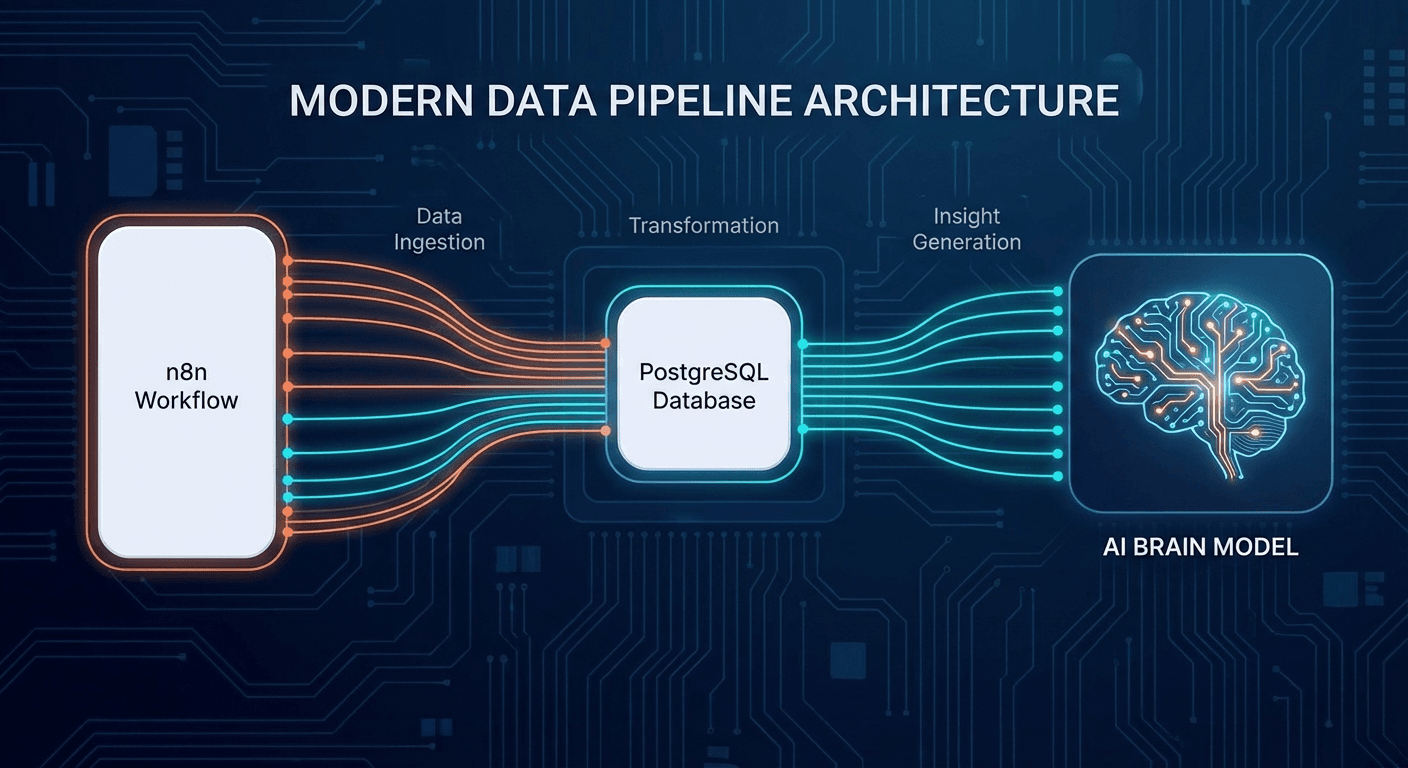
Building a Production Data Pipeline with n8n + Postgres + AI
Most startups over-engineer their data stack and waste $2,000–$5,000/month before they need it. A hands-on guide to building a production data pipeline with n8n + Postgres + AI — with correct schema design, idempotent workflows, and automatic AI analysis for $0/month.