AI-Powered Analytics Dashboard for Startups: Build vs Buy
A practical framework for choosing between custom-built and off-the-shelf analytics
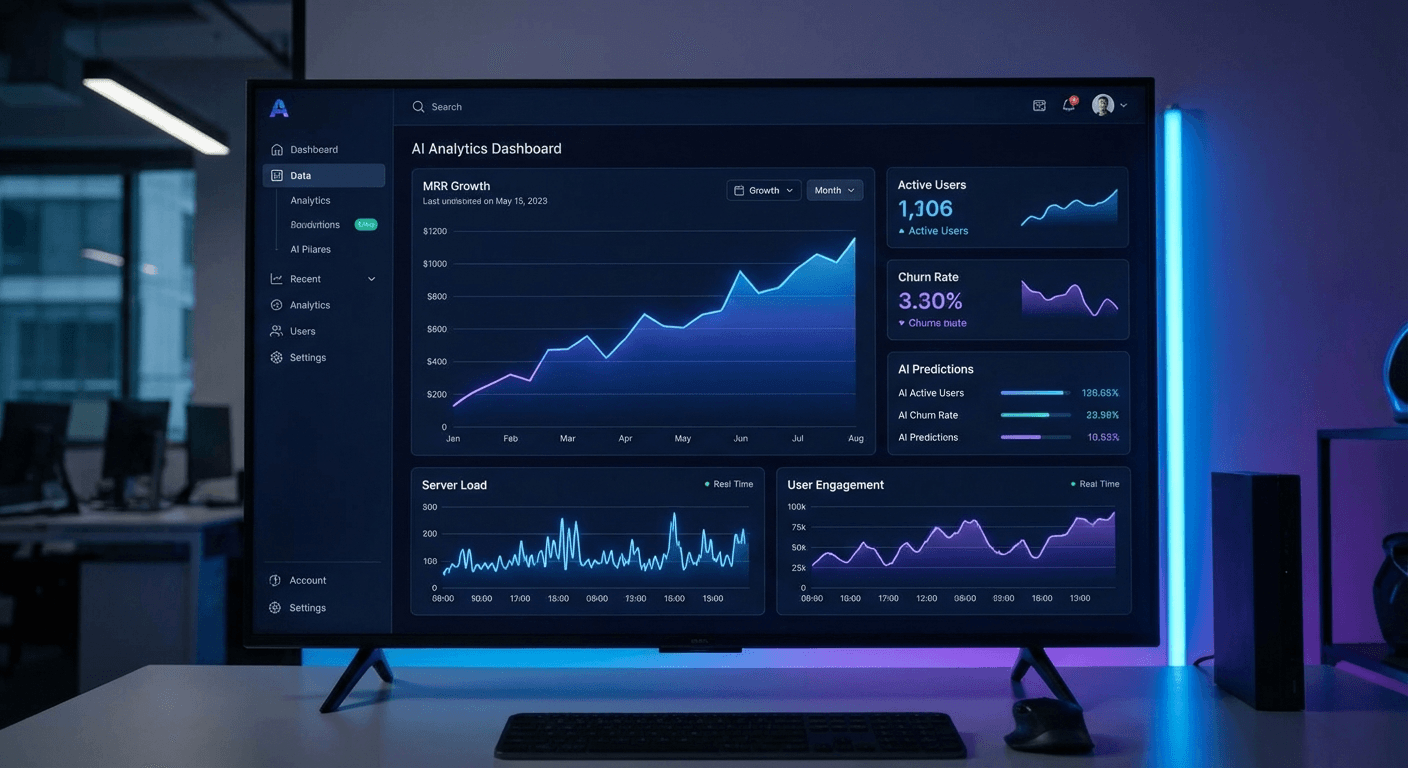
At a Glance
Updated 95 days agoMost startups waste months building dashboards from scratch when existing tools suffice, or overpay for enterprise solutions when a lightweight custom build would serve them better. The right choice depends on your data complexity, team size, and growth stage.
The Dashboard Dilemma Every Startup Faces
Every data-driven startup asks: "Build our own analytics dashboard or use Mixpanel / Metabase / Looker?" The answer isn't a binary choice — it depends on three factors: data complexity, team composition, and growth stage.
Build vs Buy Matrix
| Factor | Build Custom | Buy Off-the-Shelf |
|---|---|---|
| Data sources | 5+ custom APIs | Standard SaaS tools |
| Team size | Has 1+ engineer | No data person |
| Budget | $5K–$20K upfront | $200–$2K/month |
| AI features | Full control | Vendor-limited |
Buy when: Metrics are industry-standard (MAU, churn, revenue), no data engineer on team, pre-PMF stage where speed matters more than control.
Build when: Proprietary data sources, AI insights are a competitive moat, or subscription costs exceed $2K/month for logic that isn't genuinely complex.
Real-World Tech Stack for Custom Builds
If you decide to build, here's a stack proven in practice:
Backend & Data:
- Supabase — Hosted PostgreSQL with realtime and Row Level Security. Ideal for startups needing an API without ops overhead.
- n8n or Python ETL — Pull data from Stripe, HubSpot, custom APIs into one place. See how to build a data pipeline with n8n and Postgres.
Frontend:
- Streamlit (Python) — Prototype a dashboard in 1–2 days. No frontend engineer needed; a data scientist can ship it.
- Recharts / Tremor (React) — When you need production-ready, fully customizable UI.
AI Layer:
// Auto-summarize KPIs for CEO every morning
const summary = await openai.chat.completions.create({
  model: 'gpt-4o-mini',
  messages: [
    {
      role: 'system',
      content: 'Summarize these KPIs for a CEO in 2 sentences. Highlight the single most important signal.'
    },
    {
      : ,
      : .(kpiData)
    }
  ]
});
Related Resources
Comments (0)
Loading comments...
Stay Updated
Get weekly insights on AI, automation, and shipping fast. Join 500+ founders.
Related Articles

Clawdbot Skills: Build Your Own Automation Empire
Most AI chatbots are limited by built-in features. Clawdbot breaks that constraint with its Skill system — letting you build exactly the capabilities your workflow needs.

Building a Modern Data Pipeline with Python and PostgreSQL
PostgreSQL isn't just a relational database — it's a data platform powerful enough to anchor a pipeline processing millions of records daily. This guide walks you through the complete stack: schema design, orchestration, concurrency, monitoring, and production best practices.
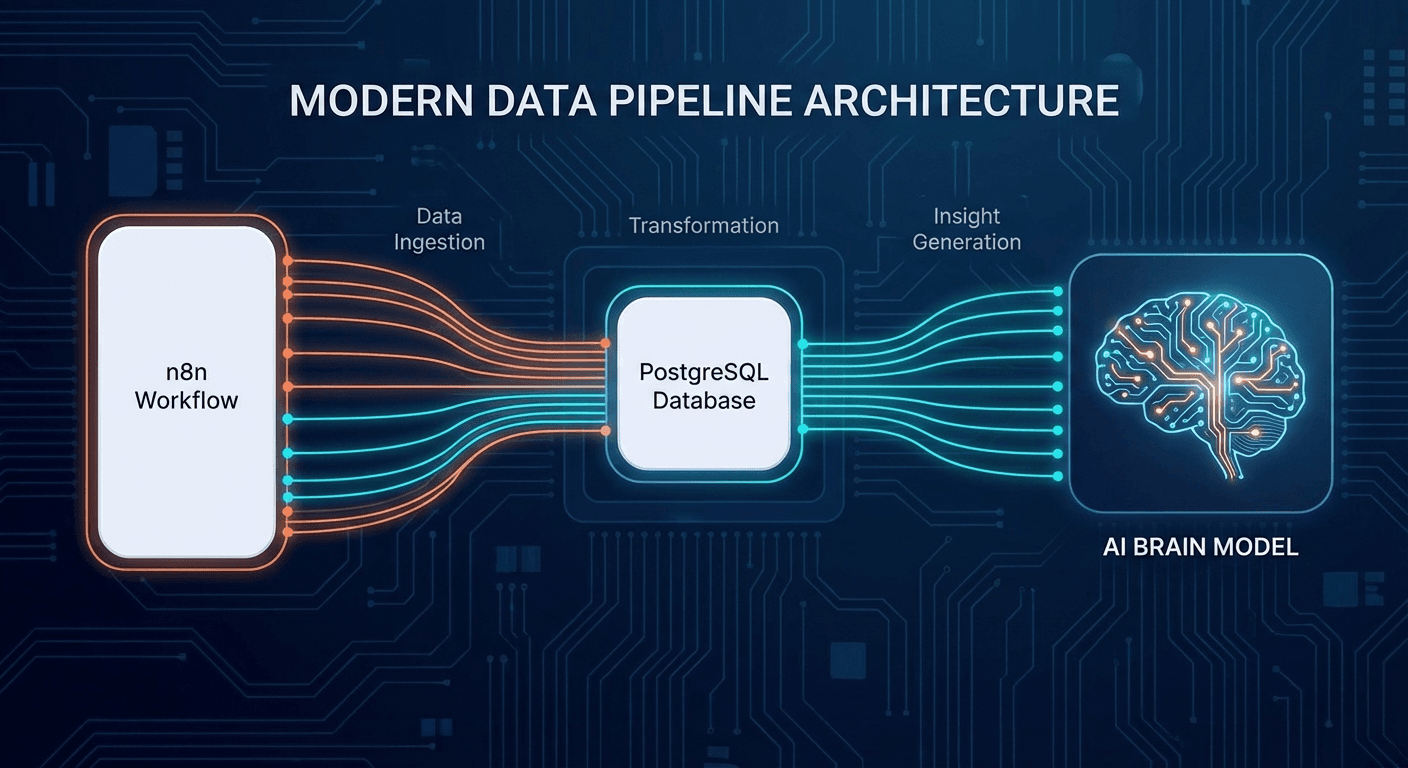
Building a Production Data Pipeline with n8n + Postgres + AI
Most startups over-engineer their data stack and waste $2,000–$5,000/month before they need it. A hands-on guide to building a production data pipeline with n8n + Postgres + AI — with correct schema design, idempotent workflows, and automatic AI analysis for $0/month.