Building a Modern Data Pipeline with Python and PostgreSQL
ETL/ELT, Concurrency, Query Optimization, and Production-Ready Best Practices

At a Glance
Complete guide to building production Data Pipelines with Python + PostgreSQL: ETL vs ELT patterns, SQLAlchemy 2.0, Pandas/Polars, Prefect orchestration, async concurrency with asyncpg, query optimization (partitioning, GIN indexes, materialized views), structured logging, and dead letter queue pattern.
PostgreSQL Is More Than a Web App Database
Modern PostgreSQL (v14+) has everything for a production data pipeline: JSONB for schemaless ingestion, Partitioning by time, native CDC via Logical Replication, Materialized Views for heavy aggregations, and LISTEN/NOTIFY for lightweight event streaming. Under 1TB data and 50K events/second, it's the most cost-effective and operationally simple stack available — no Kafka, Spark, or Snowflake required.
ETL vs ELT: Choosing the Right Pattern
| Criterion | ETL (Python-first) | ELT (SQL-first) |
|---|---|---|
| Data size | Under 100MB/batch | GB+ |
| Transformation | Complex Python logic | SQL + dbt |
| Performance | Memory bottleneck | Push computation to DB |
| Tools | Pandas, Polars | dbt, SQLMesh |
Practical recommendation: Use ELT for analytical workloads — PostgreSQL handles JOINs and aggregations better than Pandas for large datasets. Use ETL when business logic is too complex to express in SQL.
Architecture: Staging → Transform → Serving
Data Sources (API / Webhook / CSV)
        ↓
[Python Ingestion Layer — httpx, asyncpg, pandas]
        ↓
[PostgreSQL Staging — raw_events JSONB, PARTITION BY time]
        ↓  SQL transforms / dbt
[Fact Tables + Materialized Views]
        ↓
[Serving — Metabase / Grafana / Application APIs]
Schema Design Essentials
Staging table accepts raw data without strict schema validation:
CREATE TABLE raw_events (
  id          BIGSERIAL PRIMARY KEY,
  source      TEXT NOT NULL,
  event_type  TEXT NOT NULL,
  payload     JSONB NOT NULL,
  received_at TIMESTAMPTZ DEFAULT NOW(),
  processed   BOOLEAN DEFAULT FALSE,
  batch_id    UUID
) PARTITION BY RANGE (received_at);

-- Partial index — only indexes unprocessed rows
CREATE INDEX idx_unprocessed ON raw_events (received_at)
  WHERE processed  ;


 INDEX idx_payload_gin  raw_events  GIN (payload);
Related Resources
Comments (0)
Loading comments...
Stay Updated
Get weekly insights on AI, automation, and shipping fast. Join 500+ founders.
Related Articles

Clawdbot Skills: Build Your Own Automation Empire
Most AI chatbots are limited by built-in features. Clawdbot breaks that constraint with its Skill system — letting you build exactly the capabilities your workflow needs.
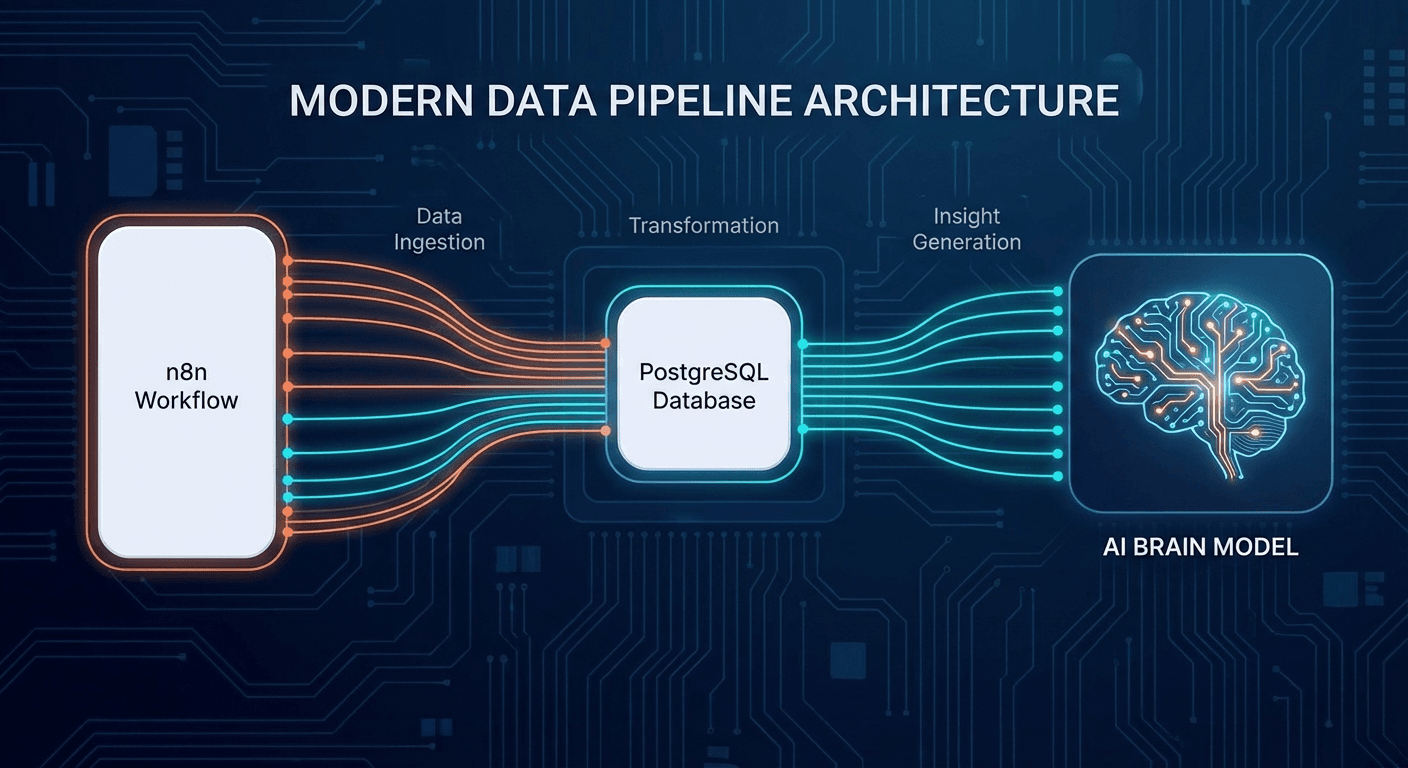
Building a Production Data Pipeline with n8n + Postgres + AI
Most startups over-engineer their data stack and waste $2,000–$5,000/month before they need it. A hands-on guide to building a production data pipeline with n8n + Postgres + AI — with correct schema design, idempotent workflows, and automatic AI analysis for $0/month.

Master Class: Build an AI Video Factory — Produce 20+ Videos Per Day
Build a fully automated AI Video Factory with RTX 3090/4090, ComfyUI, Ollama, and n8n — apply TeaCache for 2-3x faster renders and Hybrid Rendering to produce 20+ high-quality videos per day.