The Problem with Manual Lead Qualification
Your sales team receives 100 inbound leads per week. What actually happens? They spend 70% of their time on the 80% of leads with low conversion probability — and miss or delay the 20% that represent real revenue.
HubSpot's research quantifies the cost precisely: leads contacted within 5 minutes of form submission convert at 21× the rate of leads reached after 30 minutes. With manual review processes, sub-5-minute response is essentially impossible.
The fix isn't hiring more SDRs. It's automating the qualification layer entirely.
The Complete Pipeline Architecture
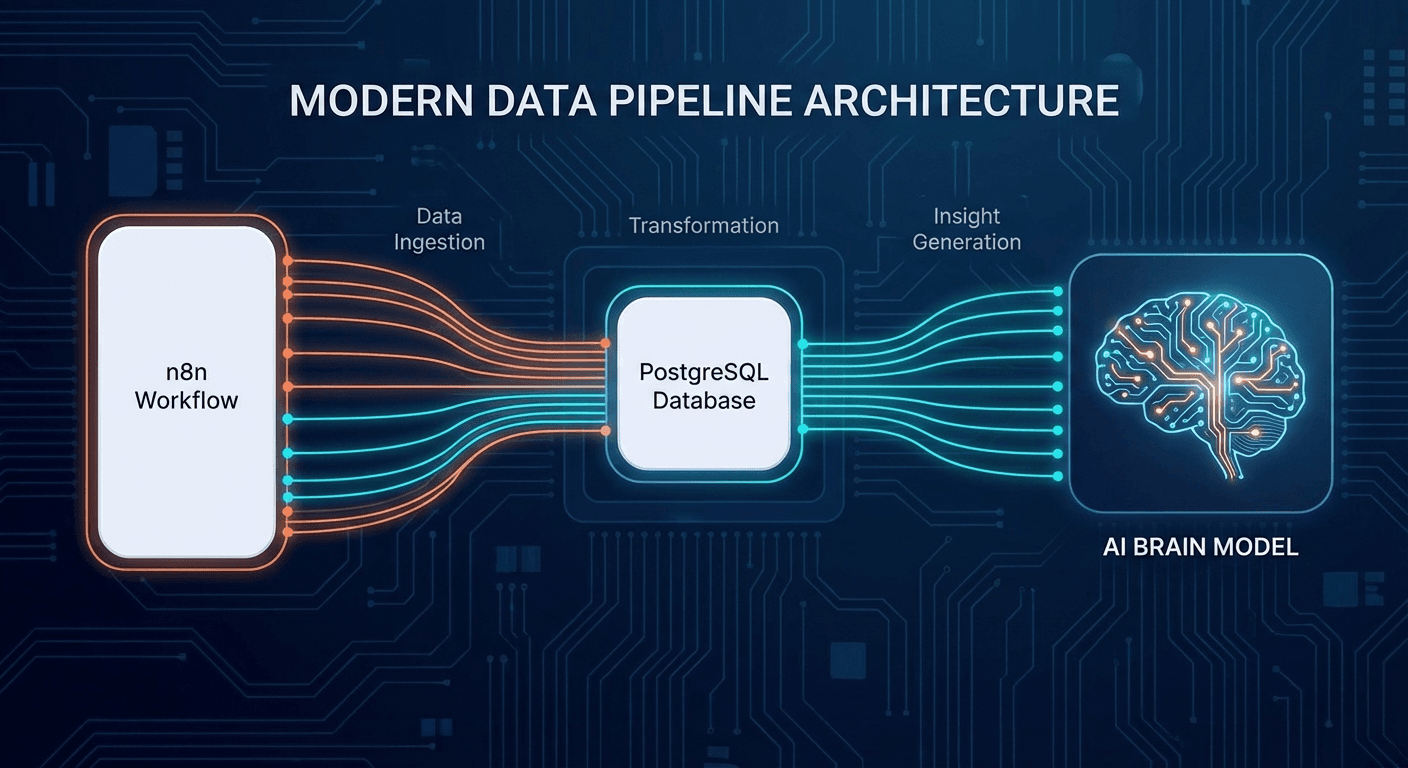
Form Submit (Typeform / HubSpot Forms / custom)
  ↓
n8n Webhook → Extract & normalize fields
  ↓
Clearbit API → Enrich with company firmographics
  ↓
OpenAI → Score 1–100 + reasoning + recommended action
  ↓
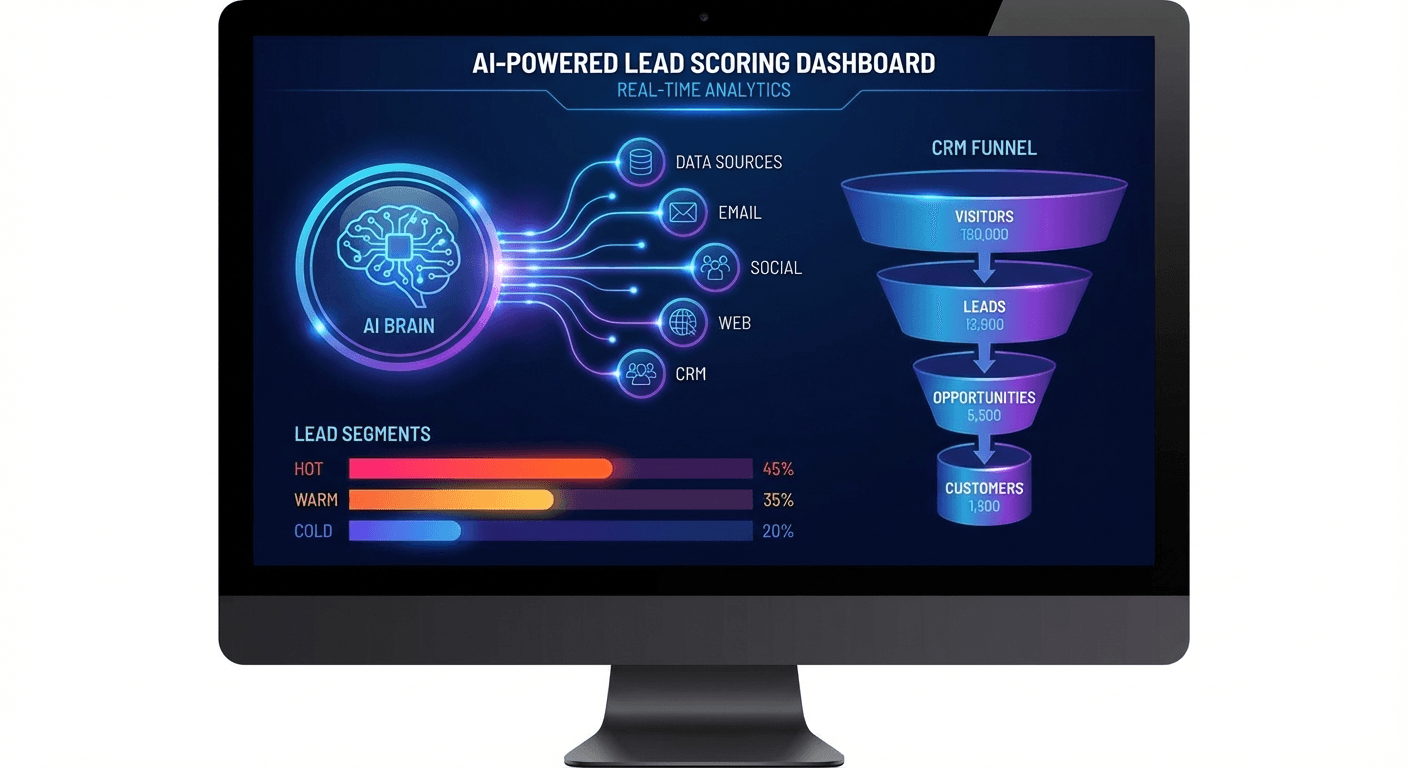
IF score ≥ 70 → Slack #hot-leads + CRM assignment
IF score 40–69 → Nurture sequence (Mailchimp)
IF score < 40 → Log only, monthly review
  ↓
Google Sheets → Full audit log for every lead
From form submission to hot lead notification in Slack: under 10 seconds.
Designing Your Scoring Model
Before building the workflow, define what makes an ideal customer. A sample model for B2B SaaS:
Firmographic Signals (+points):
- Company size 50–500 employees: +25 points
- SaaS / Tech / Fintech industry: +20 points
- Clearbit indicates recent funding: +15 points
- Business domain email (not Gmail): +10 points
Intent Signals (+points):
- Specific, detailed use case described: +20 points
- Budget > $3,000/month: +25 points
- Decision-maker role (C-level, VP, Director): +20 points
- Mentions concrete timeline: +10 points
Negative Signals (−points):
- Free email domain (Gmail, Yahoo): −20 points
- "Just exploring" / student signals: −30 points
- No company name provided: −15 points
Create a Webhook node in n8n. Configure your form tool to POST to this URL on every submission. Key fields to capture:
{
  "first_name": "Sarah",
  "email": "[email protected]",
  "company": "TechStartup Inc",
  "company_size": "50-100",
  "budget": "$3,000-10,000/month",
  "use_case": "Automate sales pipeline and customer onboarding",
  "role": "VP of Operations",
  "timeline": "Starting next month"
}
Step 2: Enrich with Clearbit
{
"method": "GET",
"url": "https://company.clearbit.com/v2/companies/find",
"headers": {
"Authorization": "Bearer {{$env.CLEARBIT_API_KEY}}"
},
"qs": {
"domain": "{{ $json.email.split('@')[1] }}"
}
}
The response adds: industry classification, headcount, estimated annual revenue, and tech stack — all signals you feed directly into the scoring prompt.
Step 3: The AI Scoring Prompt
System: You are a B2B lead scoring expert. Analyze leads against our ICP and return structured JSON.

User: Lead data:
- Name: {{first_name}}, Email: {{email}}
- Company: {{company}} ({{clearbit_industry}}, {{clearbit_employees}} employees)
- Role: {{role}}
- Budget: {{budget}}
- Use case: {{use_case}}
- Timeline: {{timeline}}
- Tech stack: {{clearbit_tech}}

Our ICP: B2B SaaS, 20–500 employees, $1k+/month budget, automation-focused.

Return JSON only:
{
  "score": <0-100>,
  "tier": "hot|warm|cold",
  "reasoning": "<2-3 sentence explanation>",
  "recommended_action": "<specific next step for sales>",
  "key_strengths": ["...", "..."],
  "concerns": ["..."]
}
Step 4: Route and Act
A Switch node branches on tier:
Hot (score ≥ 70):
→ Slack #hot-leads: "🔥 {{company}} | Score: {{score}}/100 | {{reasoning}}"
→ HubSpot: Create contact + deal, assign to senior sales rep
→ Task: "Call {{first_name}} within 15 minutes — see scoring notes"
Warm (score 40–69):
→ HubSpot: Create contact, tag "warm"
→ Mailchimp: Add to "B2B Warm Leads" nurture sequence
→ Slack #warm-leads: weekly digest inclusion
Cold (score < 40):
→ Google Sheets: Full log with reasoning
→ Mailchimp: General newsletter list
→ Schedule: Monthly re-review trigger
Analytics: Close the Feedback Loop
Every lead is logged in Google Sheets with timestamp, score, tier, AI reasoning, and action taken. After 30–60 days you have data to:
- Calibrate the model — compare predicted tier vs. actual closed deals
- Find patterns — which channels, industries, or company sizes convert highest?
- Improve the prompt — iteratively refine based on real conversion data
This turns lead scoring from a static formula into a continuously improving system.
Results
Sales teams that deploy this pipeline consistently report:
- 10–15× faster response to high-quality leads (hours → under 15 minutes)
- 35–50% higher conversion rate on hot leads (faster response + better qualification)
- 5–8 hours/week saved on manual lead review
- Zero missed leads on weekends or outside business hours
The system works best combined with automated customer onboarding on the backend — a complete pipeline from first touch to successful activation.
Advanced: Continuous Behavioral Scoring
The next level: score leads continuously across multiple touchpoints, not just at form submission:
- Viewed pricing page twice: +10 points
- Downloaded a case study: +15 points
- Opened 3+ emails in a nurture campaign: +10 points
- Visited the demo request page: +20 points
Integrate with Segment or Mixpanel, and have n8n automatically update CRM scores in real time. Enterprise-level lead intelligence — built with open-source tools at near-zero recurring cost.